

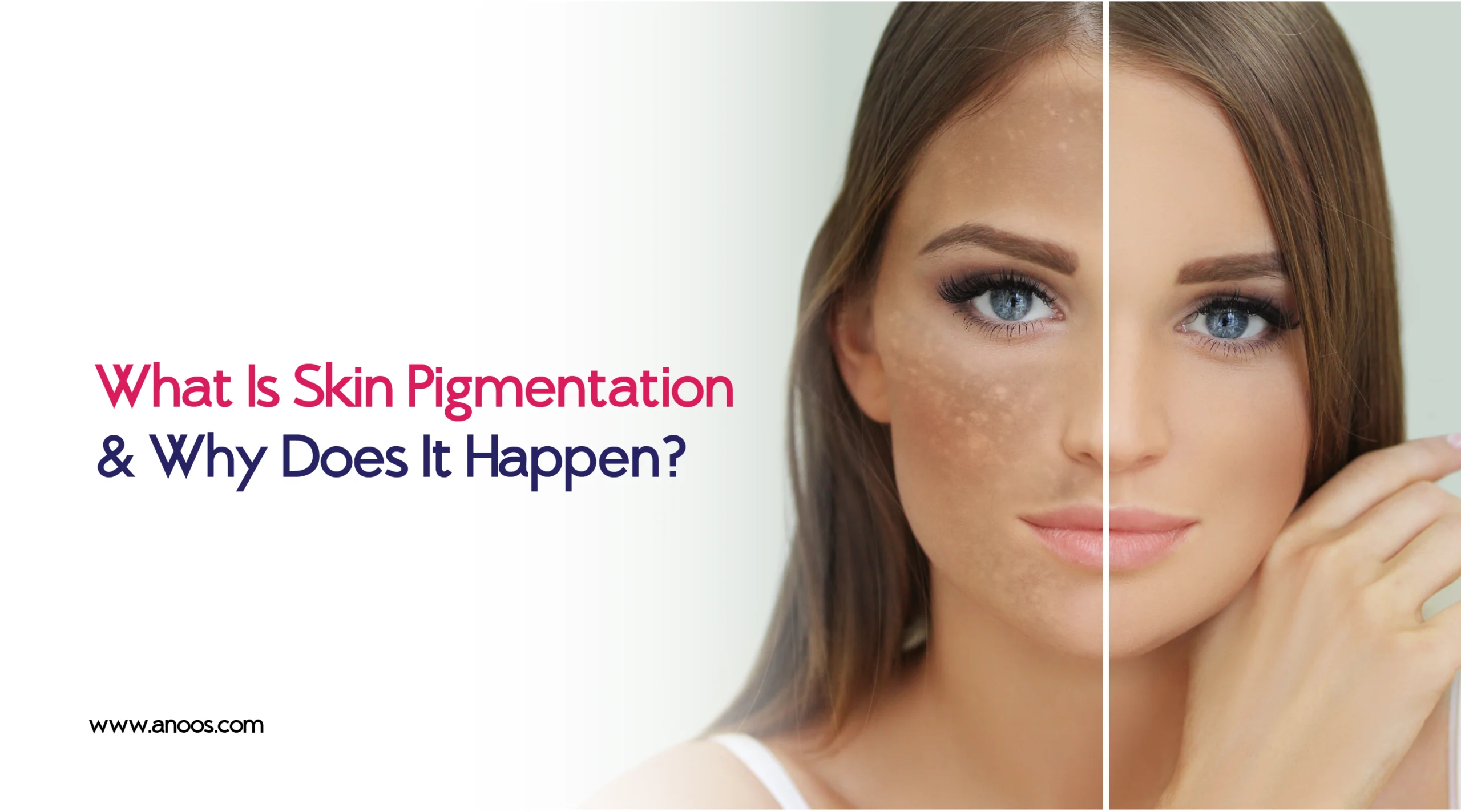
What Is Skin Pigmentation & Why Does It Happen?
Skin pigmentation is one of the most common skin concerns people search for today. To treat pigmentation effectively, it’s important to first understand what skin pigmentation is and why it happens.
The blog explains skin conditions through basic language which avoids medical terms to help you understand your skin condition better.
What Is Skin Pigmentation?
Skin pigmentation refers to the natural color of your skin, which is determined by a pigment called melanin. Melanin production occurs through melanocytes which scientists have proven to be specialized skin cells. The amount and distribution of melanin determines what skin color you will have because it creates light or dark or irregular skin tones.
The skin appears natural because melanin production maintains its proper levels.
The body develops pigmentation problems through two main reasons which include excessive melanin production and abnormal melanin development patterns and reduced melanin amounts.
The main signs of pigmentation problems include.
- Dark spots or patches
- Uneven skin tone
- Brown, black, grey, or reddish marks
- The skin area shows lighter areas which differ from the typical skin color.
How Does Melanin Affect Skin Color?
Melanin’s main role is to protect the skin from UV damage. When your skin is exposed to sunlight, melanocytes produce more melanin as a defense mechanism. The skin develops a tan after sun exposure.
The skin develops pigmentation when melanin production exceeds typical levels which results in abnormal skin layer deposits.
Why Does Skin Pigmentation Happen?
Pigmentation doesn’t have just one cause. Most instances result from various internal and external elements which interact with each other.
1.Sun Exposure (UV Rays)
Sun exposure is the number one cause of pigmentation.
The skin develops damage through multiple exposures to UV radiation.
- Melanin production increases.
- The skin pigment extends its reach into the deeper sections of the skin.
- The skin develops dark spots which become more noticeable while tanning occurs more intensely.
Sun protection failures will cause treated pigmentation to return at a fast pace.
2.Hormonal Changes
The body’s hormonal imbalances cause women to develop skin pigmentation changes.
Common triggers include:
- Pregnancy
- Birth control pills
- PCOS
- Thyroid imbalance
- Menopause
The skin condition hormonal pigmentation creates melasma which produces symmetrical dark skin patches that affect the cheeks and forehead and nose and upper lip area.
3.Post-Inflammatory Pigmentation (PIH)
Any form of skin injury or inflammation can leave behind dark marks which include:
- Acne
- Pimples
- Burns
- Cuts
- Rashes
- Aggressive skincare treatments
The body produces too much melanin during healing because inflammation causes this process which results in skin pigmentation after the skin appears to have recovered.
4.Genetics
Your family history of pigmentation problems could increase your risk to develop.
- Freckles
- Dark spots
- Uneven skin tone
The appearance of genetic pigmentation tends to emerge during early life stages but people need medical assistance to achieve noticeable results.
5.Aging
As skin ages:
- Cell renewal slows down
- Melanin distribution becomes uneven
- Sun damage from earlier years starts surfacing
The skin develops age spots which doctors call liver spots that appear on facial skin and hands and neck areas.
6.Skin Care & Cosmetic Products
The use of wrong products results in skin pigmentation.
- Harsh scrubs
- Over-exfoliation
- Steroid creams
- Products containing powerful scents together with chemical substances.
The skin barrier damage creates skin sensitivity which results in inflammatory reactions that produce skin pigmentation.
7.Underlying Medical Conditions
Medical conditions exist as factors which affect skin pigmentation.
- Addison’s disease
- Liver disorders
- Nutritional deficiencies
- Chronic inflammation
This is why professional evaluation is important before starting any pigmentation treatment.
Types of Skin Pigmentation
The selection of appropriate treatment depends on the identification of pigmentation types.
Hyperpigmentation
The body produces too much melanin which results in dark skin patches.
Examples include:
- Melasma
- Sun spots
- Post-acne marks
- Freckles
Hypopigmentation
The skin develops lighter areas because melanin production decreases during this process.
Examples include:
- Vitiligo
- Post-injury light spots
Is Skin Pigmentation Permanent?
The skin pigmentation exists as a permanent condition which does not disappear immediately.
- The skin surface pigments show immediate responses to any modifications that occur.
- Deep pigmentation requires an extended period of time to achieve results.
- The skin will show its original pigmentation when maintenance procedures are not performed correctly.
The combination of professional treatments with correct skincare methods and sufficient sun protection will produce the most effective results.
When Should You Seek Professional Treatment?
You should consult a skin expert if:
- The skin area shows increasing pigmentation which becomes more intense.
- Home remedies show no improvement
- The dark spots continue to appear at fixed time periods.
- Skin tone looks uneven despite skincare
Professional treatments operate at skin depths which topical products fail to penetrate.
Sun protection together with correct skincare and expert-guided treatments help patients achieve their goal of obtaining clear and evenly toned skin.